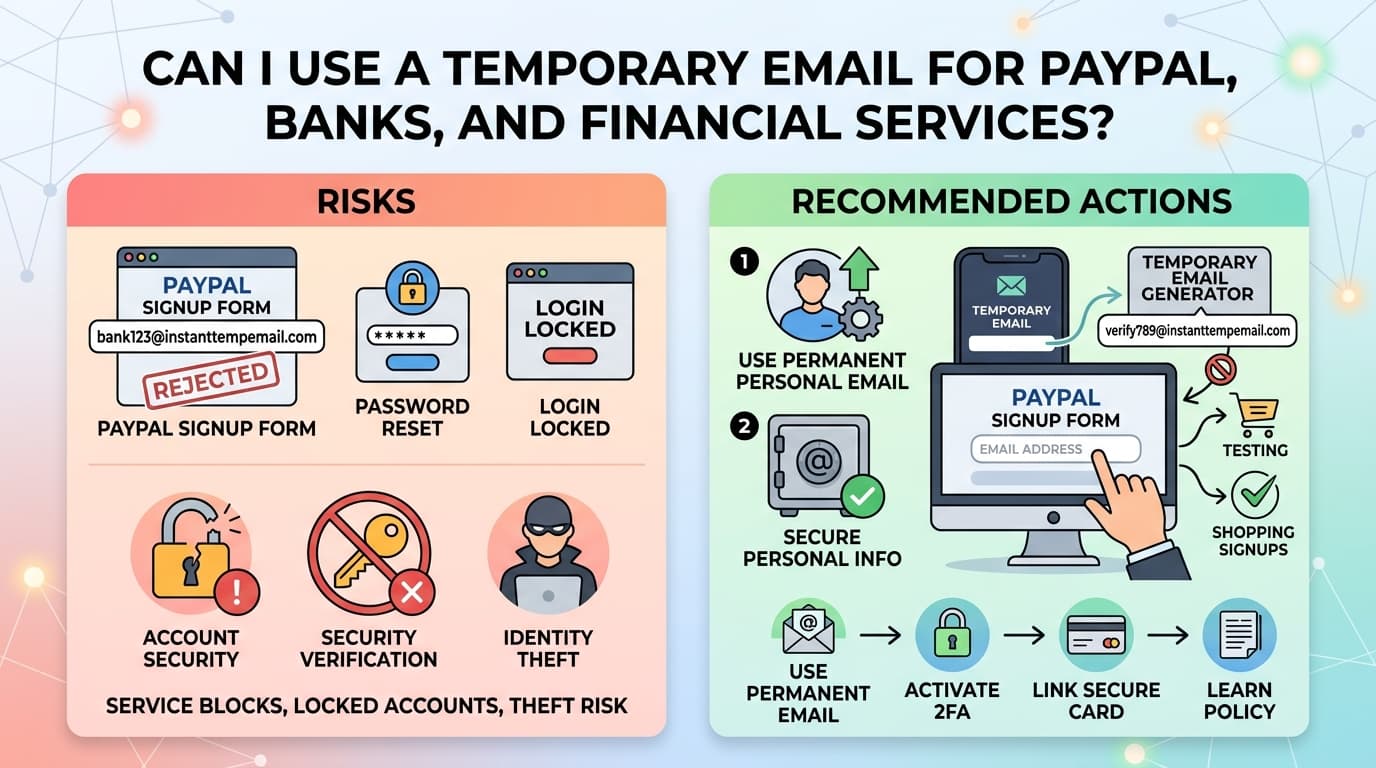
Respuesta corta: no — y hacerlo pone tu dinero en serio riesgo.
Respuesta larga: existen formas legítimas de proteger tu bandeja financiera del spam sin usar una dirección desechable. Esta guía explica exactamente por qué el email temporal falla para las cuentas financieras, qué puede salir mal y cuáles son las alternativas correctas.
Por qué el email temporal arruina las cuentas financieras
Los servicios financieros — PayPal, tu banco, Stripe, Wise, Revolut, los exchanges de criptomonedas — todos utilizan tu dirección de email como mecanismo principal de recuperación. Si pierdes el acceso a tu contraseña, quedas bloqueado fuera de tu cuenta o necesitas verificar una transacción, la dirección de email es el primer lugar al que te contactan.
Si esa dirección ha expirado, ocurren tres cosas:
1. No puedes recuperar tu cuenta. Los emails de restablecimiento de contraseña van a una bandeja muerta. Los equipos de soporte te pedirán que verifiques la propiedad a través del email registrado. Si esa bandeja ya no existe, demostrar la propiedad de la cuenta se convierte en un proceso largo, a veces imposible.
2. Te pierdes alertas de seguridad críticas. Los bancos y los servicios de pago envían alertas en tiempo real sobre transacciones sospechosas, intentos de inicio de sesión desde nuevos dispositivos y cambios en las políticas. Perderse estas alertas porque la bandeja expiró significa que no detectarás el fraude a tiempo.
3. Tu cuenta puede ser suspendida. La mayoría de los servicios financieros envían periódicamente emails de verificación o cumplimiento normativo. No responder a estos — porque la bandeja está muerta — puede provocar la suspensión o el cierre automático de la cuenta.
Lo que ocurre realmente cuando tu email temporal expira
Aquí tienes un escenario realista:
Te registras en PayPal con una dirección temporal para evitar el spam. Todo funciona bien durante unas semanas. Luego:
- PayPal envía un email de revisión de seguridad que requiere confirmación — nunca lo ves
- Tu cuenta queda marcada y limitada
- Intentas iniciar sesión y no puedes — has olvidado tu contraseña
- Haces clic en "Olvidé mi contraseña" — el email de restablecimiento va a la bandeja temporal expirada
- El soporte de PayPal te pide que verifiques a través del email registrado
- Quedas bloqueado permanentemente sin ninguna vía de recuperación
Esto no es una hipótesis. Es un patrón bien documentado en los foros de soporte de PayPal y los hilos de Reddit de usuarios que cometieron exactamente este error.
Servicios en los que nunca deberías usar email temporal
Cualquier servicio donde perder el acceso tenga consecuencias reales:
- Plataformas de pago — PayPal, Stripe, Square, Venmo, Cash App
- Bancos y cooperativas de crédito — cualquier portal de banca online
- Exchanges de criptomonedas — Coinbase, Binance, Kraken (perder el acceso aquí puede significar perder fondos de forma permanente)
- Cuentas de inversión — Robinhood, eToro, cualquier bróker
- Servicios gubernamentales — portales fiscales, sistemas de prestaciones, verificación de identidad
- Portales de salud — historiales médicos, servicios de prescripción, seguros
- Cuentas de email principales — Gmail, Outlook, Apple ID (estos son la recuperación de todo lo demás)
- Almacenamiento en la nube con archivos importantes — Google Drive, Dropbox, iCloud
La regla es simple: si perder el acceso a la cuenta te costaría dinero, tiempo o crearía un problema legal o de cumplimiento, usa una dirección de email real y permanente.
La forma correcta de proteger tu bandeja financiera
Quieres mantener el spam de marketing fuera de tus cuentas financieras sin usar una dirección desechable. Así es cómo hacerlo:
Opción 1: Un email permanente dedicado exclusivamente a cuentas financieras
Crea una dirección de Gmail, Outlook o ProtonMail separada, utilizada exclusivamente para bancos, servicios de pago y cuentas financieras. Nunca des esta dirección a tiendas, newsletters o cualquier servicio no financiero.
Esta dirección recibe casi ningún spam porque nunca se usa para registros. Cuando recibes un email en esta dirección, casi siempre es legítimo e importante.
La configuración lleva 5 minutos. Es lo más impactante que puedes hacer para la seguridad de tu email financiero.
Opción 2: Un alias de email permanente que reenvía de forma fiable
Servicios como SimpleLogin o AnonAddy te permiten crear un alias permanente (no temporal) que reenvía a tu bandeja real. El alias es estable, tú lo controlas y puedes mantenerlo activo indefinidamente.
La diferencia con el email temporal: tú posees el alias y puedes mantenerlo activo todo el tiempo que quieras. No expira automáticamente.
Esto es mejor que tu dirección real para las cuentas financieras porque si el alias alguna vez recibe spam, puedes ver que llegó a través del alias — pero el alias permanece activo, por lo que nunca pierdes el acceso a la cuenta.
Opción 3: ProtonMail para máxima seguridad
ProtonMail es un servicio de email con cifrado de extremo a extremo. Usar una dirección de ProtonMail para las cuentas financieras significa que tus emails financieros están cifrados en reposo y en tránsito — ni siquiera ProtonMail puede leerlos.
El nivel gratuito es suficiente para la mayoría de los usuarios. Vale la pena considerarlo si tu modelo de amenazas incluye el espionaje por parte del proveedor de email o las filtraciones de datos a nivel del proveedor.
Dónde el email temporal SÍ es apropiado cerca de temas financieros
Hay casos de uso adyacentes donde el email temporal está bien:
- Suscribirse a un blog o newsletter de finanzas personales — no estás creando una cuenta financiera, solo leyendo contenido
- Descargar una plantilla de presupuesto gratuita que requiere un email
- Crear una cuenta demo en una aplicación fintech que no tiene dinero real
- Leer un artículo financiero de pago que requiere un email para acceder
La distinción es: ¿estás creando una cuenta que tiene dinero o proporciona acceso a datos financieros? Si es así, usa una dirección real. Si solo estás descargando contenido o leyendo newsletters, una dirección temporal está perfectamente bien.
Preguntas frecuentes
¿Puede PayPal detectar que usé un email temporal? PayPal y la mayoría de los servicios financieros verifican las direcciones de email contra listas de dominios desechables y a menudo las rechazan durante el registro. Si de alguna manera logras pasar, los riesgos descritos anteriormente siguen aplicando.
Ya me registré en PayPal con un email temporal que expiró. ¿Qué hago? Contacta al soporte de PayPal directamente. Prepárate para verificar tu identidad por medios alternativos — documentos de identidad, detalles de cuenta bancaria o tarjeta vinculada, historial de transacciones. La recuperación es posible pero lenta. Úsalo como motivación para configurar una dirección de email financiera dedicada en el futuro.
¿Es seguro usar el mismo email para todas mis cuentas bancarias? Un email dedicado utilizado únicamente para servicios financieros es seguro y práctico. El riesgo no es usar una dirección para varios bancos — es usar una dirección que también recibe spam y marketing de servicios no relacionados, lo que aumenta la exposición a filtraciones.
¿Qué pasa si mi banco envía emails de marketing a mi dirección financiera? Usa los filtros de Gmail o las reglas de tu cliente de email para etiquetar y archivar automáticamente los emails del departamento de marketing de tu banco, manteniendo las alertas de seguridad en tu bandeja principal. La mayoría de los bancos usan diferentes direcciones de remitente para el marketing y los emails de seguridad, lo que hace que este filtrado sea sencillo de configurar.